The True Cost of Manual Coordination on Mega Projects
The 30% Problem
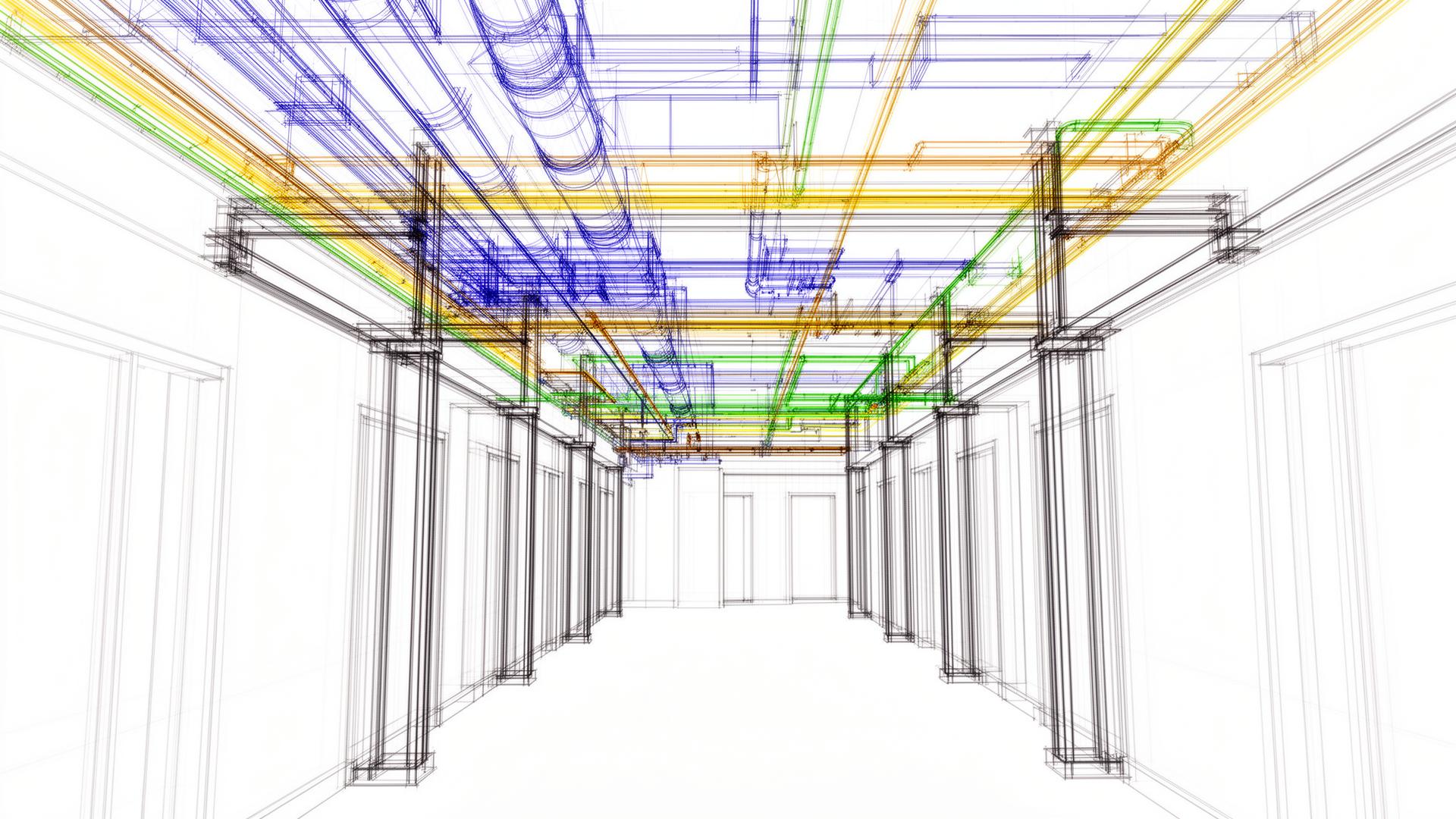
Industry research consistently shows that rework accounts for up to 30% of total construction costs on large projects. The primary driver is not poor workmanship on site: it is poor coordination during the design and preconstruction phases. Spatial conflicts between structural, mechanical, electrical, and hydraulic systems that are not identified digitally become expensive physical problems. A single duct-structure clash discovered on site can cascade into weeks of delays and hundreds of thousands in cost.
Why Spreadsheets and Weekly Meetings Fail
Traditional coordination relies on periodic design team meetings, 2D overlay checks, and email-based RFI workflows. These methods are inherently reactive: they catch problems after they have already been designed in, not before. The lag between identifying a clash and resolving it through manual processes often exceeds the programme's tolerance. By the time a resolution is agreed upon, the contractor has already started fabrication or procurement based on outdated information.
The Automated Coordination Workflow
Modern VDC coordination replaces reactive processes with continuous, automated checking. Cloud-based model federation enables multiple disciplines to contribute to a single coordinated model. Automated clash detection runs on every model update, generating categorised reports that prioritise critical conflicts. Rule-based checking validates compliance with project standards, clearance requirements, and constructability constraints. The result is near-real-time spatial coordination that catches problems in hours, not weeks.
Beyond Clashes: Construction Intelligence
Effective coordination extends beyond clash detection. 4D sequencing ties the model to the construction programme, showing exactly what gets built, when, and where crane coverage, material staging, and temporary works intersect. Site logistics modelling optimises access routes, laydown areas, and vertical transport. Progress tracking overlays actual vs. planned progress on the model, giving project leadership visual, data-driven insight into delivery status.
Building the Business Case
The ROI on automated coordination is straightforward to calculate. Track the number of clashes resolved pre-construction, the reduction in site RFIs, the decrease in programme-impacting changes, and the reduction in rework costs. Our clients typically see coordination timelines compressed from weeks to days, site RFIs reduced by 40-60%, and rework costs cut by significant margins. The systems we build are not one-off project tools; they become reusable coordination infrastructure across the entire project portfolio.
Related case studies

Need help implementing this in your projects?
We build production-grade systems, not theoretical frameworks. Let's discuss your specific challenges.