Scaling a Construction Business with Digital Systems
Scaling a construction business is not simply about hiring more people for more projects; it is about building reusable digital infrastructure such as project templates, automated workflows, and portfolio dashboards. The key distinction is between digital tools, which are software licences like Revit or Power BI, and digital infrastructure, which is the system connecting them through standardised templates, automated data flows, and reporting pipelines. Firms that build this infrastructure can handle more project volume without proportionally more headcount, because setup, standards, and reporting are embedded in the system rather than recreated on every job.
The Scaling Problem in Construction
Construction businesses face a fundamental scaling challenge. Unlike software companies, adding more projects means adding more people, more coordination overhead, and more risk. The firms that break through this ceiling are the ones that build digital infrastructure: reusable templates, automated workflows, standardised processes, and dashboards that let leadership see across the entire portfolio without relying on individual project managers to surface problems.
Digital Infrastructure vs. Digital Tools
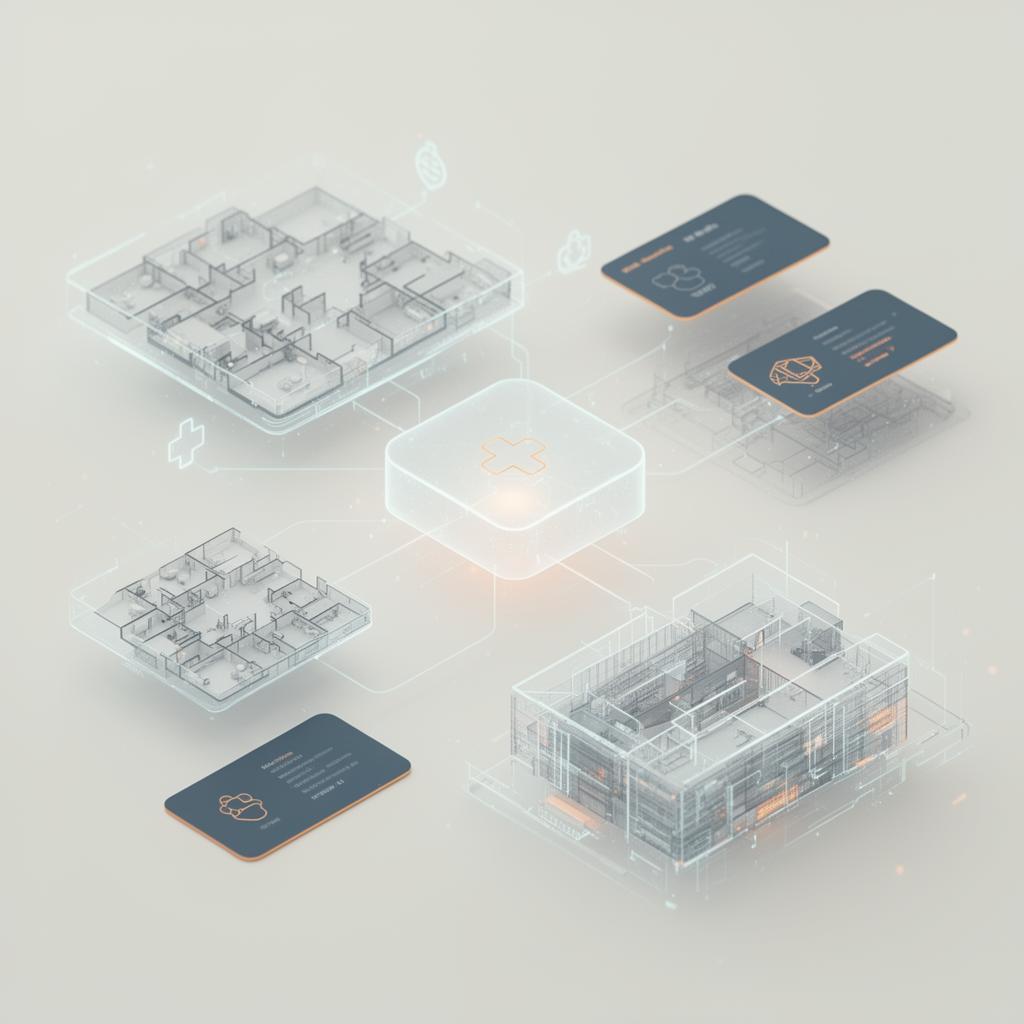
There is a critical distinction between buying digital tools and building digital infrastructure. Tools are software licences: Revit, ACC, Procore, Power BI. Infrastructure is the system that connects them: the automated data flows, standardised templates, custom integrations, and reporting pipelines that ensure every project runs the same way, produces the same quality, and generates the same visibility. Tools without infrastructure create islands. Infrastructure makes tools compound.
The Reusable Project Template
The foundation of scalable delivery is the reusable project template. This goes far beyond a Revit template file. It includes CDE folder structures, naming conventions, model setup protocols, clash detection rulesets, documentation standards, and reporting templates. When a new project starts, the entire digital environment is pre-configured. Setup that used to take weeks happens in hours. Standards that used to vary between project managers are now embedded in the system.
Automation That Compounds
Every automation tool built for one project should serve every future project. A fabrication drawing automation system built for a facade contractor does not just speed up one project: it transforms the contractor's entire business model. A compliance dashboard built for one developer's portfolio should be configurable for their next ten projects. The key is building automation with reusability as a first-class requirement, not an afterthought.
Measuring Digital Maturity
We assess digital maturity across five dimensions: standardisation (how consistent are processes across projects), automation (how much manual work has been eliminated), visibility (can leadership see portfolio status in real-time), integration (do systems talk to each other), and scalability (can the current approach handle 2x project volume without 2x headcount). Most firms score high on tools but low on infrastructure. That is where the transformation opportunity lives.
Frequently asked questions
Why can't construction businesses scale the same way software companies do?
In construction, adding more projects typically means adding more people, more coordination overhead, and more risk, unlike software where growth can happen without a proportional increase in headcount. The firms that break through this ceiling are the ones that build digital infrastructure, including reusable templates, automated workflows, standardised processes, and dashboards, that let leadership see across the whole portfolio without relying on individual project managers to surface problems.
What is the difference between digital tools and digital infrastructure?
Digital tools are software licences such as Revit, ACC, Procore, or Power BI. Digital infrastructure is the system that connects those tools together: the automated data flows, standardised templates, custom integrations, and reporting pipelines that ensure every project runs the same way, produces the same quality, and generates the same visibility. Tools without infrastructure create islands, while infrastructure makes the tools compound in value.
What should a reusable project template actually include?
A reusable project template goes far beyond a single Revit template file. It covers CDE folder structures, naming conventions, model setup protocols, clash detection rulesets, documentation standards, and reporting templates, so that when a new project starts, the entire digital environment is pre-configured. This turns setup that used to take weeks into a matter of hours and embeds standards that used to vary between project managers directly into the system.
How do you make automation investments pay off across multiple projects, not just one?
Automation should be built with reusability as a first-class requirement rather than an afterthought, so every tool built for one project can serve future projects too. For example, a fabrication drawing automation system built for a facade contractor can transform the contractor's entire business model rather than just speeding up a single job, and a compliance dashboard built for one developer's portfolio can be configured for their next ten projects.
How can a construction firm measure its own digital maturity?
Digital maturity can be assessed across five dimensions: standardisation, meaning how consistent processes are across projects; automation, meaning how much manual work has been eliminated; visibility, meaning whether leadership can see portfolio status in real time; integration, meaning whether systems talk to each other; and scalability, meaning whether the current approach could handle double the project volume without doubling headcount. Most firms score well on tools but poorly on infrastructure, which is where the transformation opportunity lives.
Related case studies


Need help implementing this in your projects?
We build production-grade systems, not theoretical frameworks. Let's discuss your specific challenges.