Coordinated models. Documented sequences. Predictable installs.
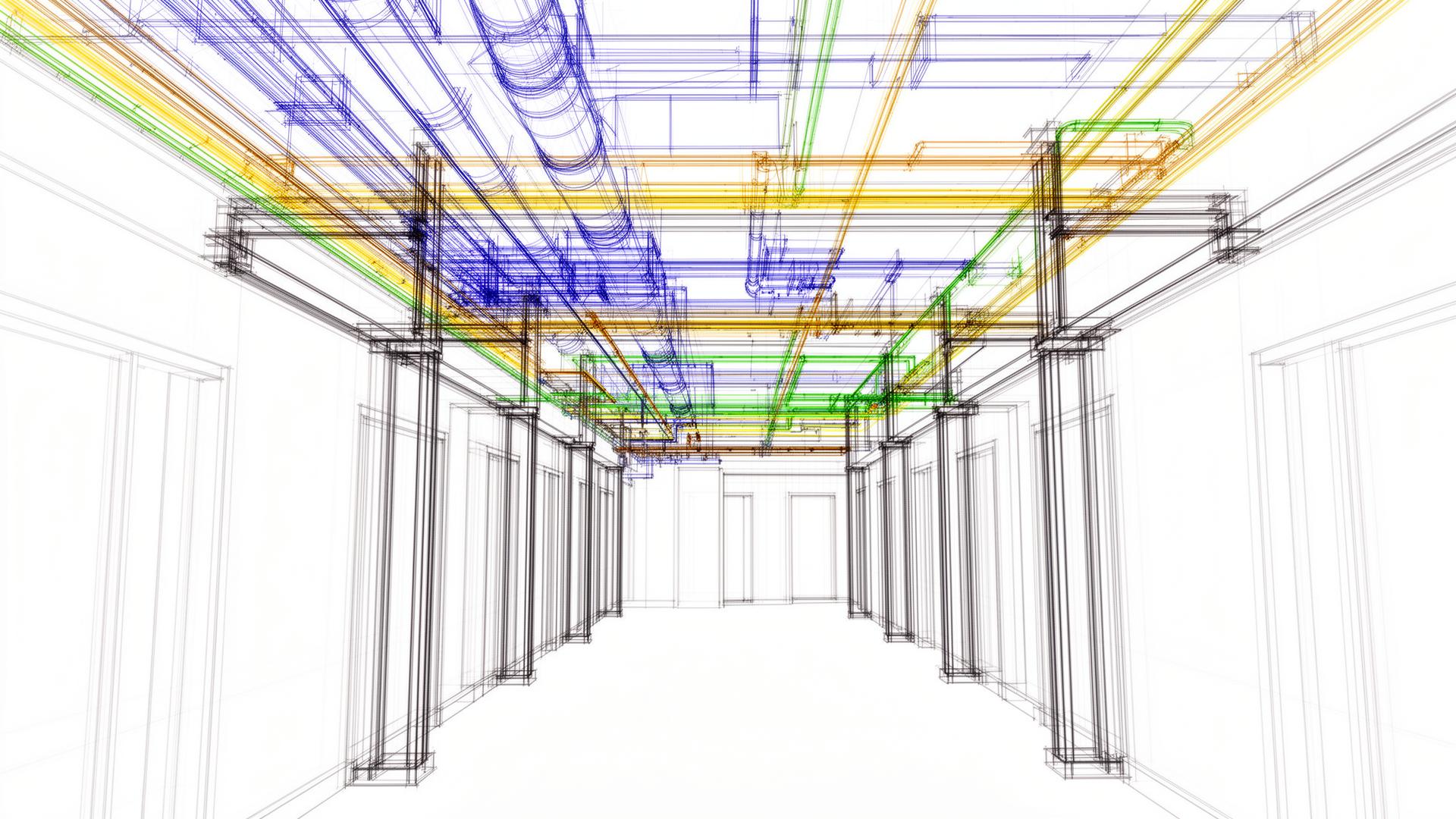
Contractors carry the cost of uncoordinated design and ad-hoc documentation. We build the digital infrastructure that turns design intent into clash-resolved, sequence-aware, install-ready information your site teams can actually use.
Where it tends to break
Common operational symptoms we hear in contractors conversations.
Late-stage clashes that surface on site
Federation gaps and inconsistent model standards push spatial conflicts into installation, where the cost to resolve is highest.
Documentation drift between model and drawings
Manual sheet production lags behind design changes, leaving the field working from outdated information.
Programme exposure on coordination-heavy works
Without modelled sequencing and logistics, programme assumptions remain unverified until the works are physically attempted.
Subcontractor model quality is uneven
Inputs from MEP, structural and facade subcontractors arrive in mixed standards, slowing federation and clash review cycles.
What we deploy for you
Each capability ships as a scoped engagement with measurable outcomes.
Further reading
Clash Detection and Model Coordination: Best Practices
How to leverage cloud management, model federation, and automated clash detection to identify spatial conflicts, enhance coordination, and minimise on-site revisions.
The True Cost of Manual Coordination on Mega Projects
Rework accounts for up to 30% of construction costs. We quantify the hidden price of manual coordination and show how automated clash workflows, federated models, and real-time dashboards eliminate it.
Construction Automation: From Prefab Tracking to Site Robotics
The construction site is going digital. From QR and RFID-tracked prefab modules to autonomous site monitoring and robotic assembly, learn how automation is reshaping how buildings get built.
Talk to us about a coordination programme
We will scope the work, baseline the metrics, and propose the smallest first deployment that proves the model.