Automated Compliance: AI Agents for Building Code Verification
AI compliance agents parse building codes into structured, machine-readable rules, then extract properties from BIM model elements such as door widths, fire ratings, and structural sizes to check them against those rules automatically. Non-conformances are flagged with specific code references and resolution recommendations in minutes rather than weeks. Because codes such as the Australian NCC, UK Building Regulations, and US IBC differ fundamentally, effective agents use jurisdiction-specific rule engines rather than generic, off-the-shelf logic, and deliver the most value when integrated continuously into design workflows rather than run as a one-time gate.
The Compliance Bottleneck
Building code compliance checking is one of the most time-consuming, error-prone processes in AEC. A single project may need to comply with hundreds of regulatory clauses spanning fire safety, accessibility, structural adequacy, energy performance, and planning requirements. Traditionally, compliance is verified through manual review: experienced professionals reading through codes and cross-referencing design documentation. This process is slow, expensive, and inherently inconsistent because different reviewers interpret requirements differently. On large projects, compliance checking can consume thousands of professional hours and still miss critical non-conformances.
How AI Compliance Agents Work
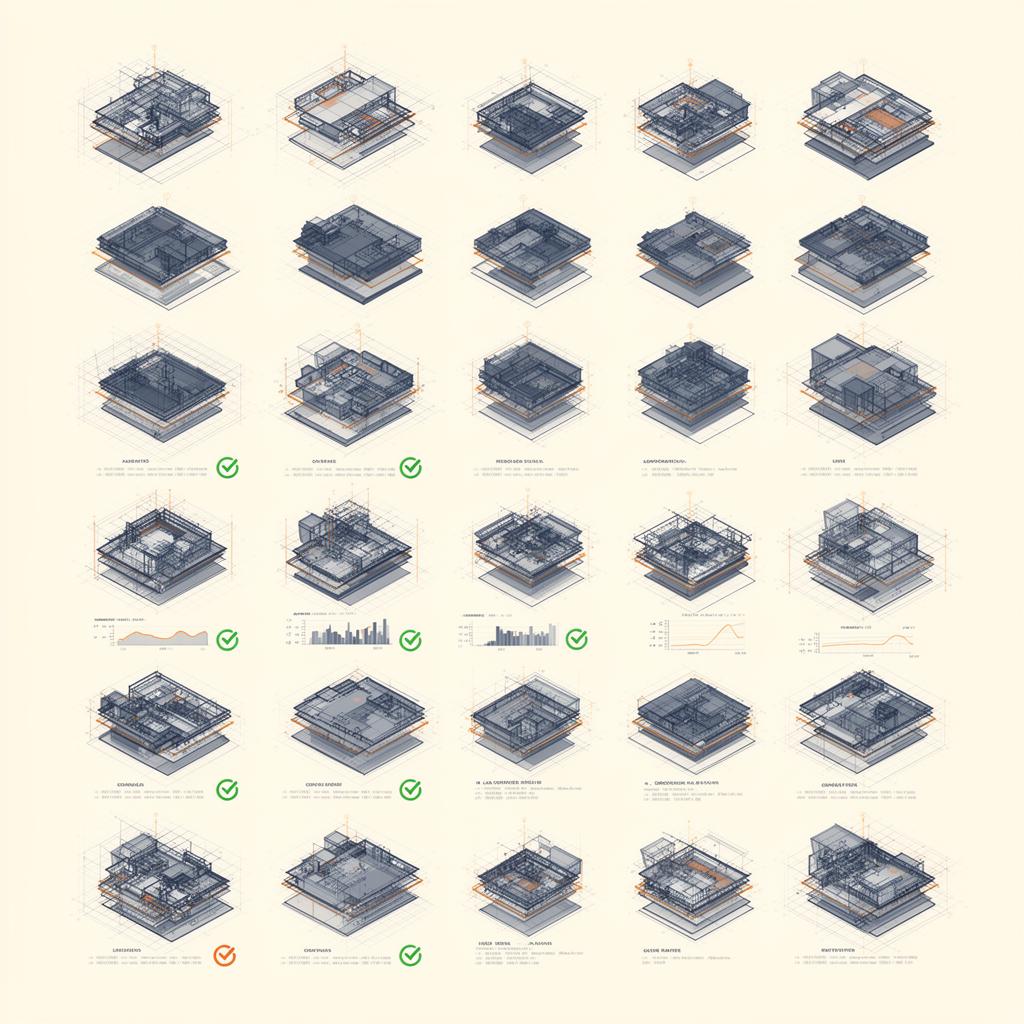
AI compliance agents operate in three stages. First, the regulatory knowledge base: the system ingests building codes, standards, and project-specific requirements, parsing them into structured, machine-readable rules. Second, model interrogation: the agent extracts relevant properties from BIM model elements (door widths, corridor lengths, fire rating assignments, structural member sizes) and evaluates them against the rule set. Third, reporting: non-conformances are flagged with specific code references, affected elements are highlighted in the model, and resolution recommendations are generated. The entire process runs in minutes rather than weeks.
Jurisdiction-Specific Intelligence
Building codes vary dramatically between jurisdictions. Australian NCC requirements differ fundamentally from UK Building Regulations, US IBC, or Middle Eastern civil defence codes. Off-the-shelf compliance tools trained on generic requirements miss jurisdiction-specific nuances that determine whether a building gets approved. Our compliance agents are trained on specific regulatory frameworks relevant to each project. We build separate rule engines for different code sets, ensuring that the system understands the exact requirements that the certifying authority will apply.
Integration with Design Workflows
Compliance checking is most valuable when it runs continuously during design, not as a one-time gate at the end. Our agents integrate with Revit, ACC, and cloud-based model environments to run automated compliance sweeps on every model update. Designers receive immediate feedback when a change introduces a non-conformance. This continuous checking model catches problems when they cost nothing to fix: during design, rather than during construction when rectification can be prohibitively expensive.
The Business Case for Automated Compliance
The ROI on automated compliance is measured in three dimensions. First, time: compliance checking that took weeks now completes in hours. Second, risk: systematic, comprehensive checking catches non-conformances that manual review misses, reducing the risk of approval delays and post-construction rectification. Third, consistency: the system applies the same interpretation to every element, every time, eliminating the variability inherent in human review. For firms managing multiple projects across different jurisdictions, automated compliance becomes a scalable capability rather than a per-project cost.
Frequently asked questions
How do AI compliance agents check building code conformance?
AI compliance agents work in three stages. First, they ingest building codes, standards, and project-specific requirements and parse them into structured, machine-readable rules. Second, they extract relevant properties from BIM model elements, such as door widths, corridor lengths, fire rating assignments, and structural member sizes, and evaluate them against the rule set. Third, they report non-conformances with specific code references, highlight affected elements in the model, and generate resolution recommendations, with the whole process running in minutes rather than weeks.
Why is manual building code compliance checking a problem for AEC firms?
A single project may need to comply with hundreds of regulatory clauses covering fire safety, accessibility, structural adequacy, energy performance, and planning requirements. Manual review by professionals cross-referencing codes against documentation is slow, expensive, and inconsistent because different reviewers interpret requirements differently, and on large projects it can consume thousands of hours while still missing critical non-conformances.
Can a generic, off-the-shelf compliance tool handle different jurisdictions?
Generally no. Building codes vary dramatically between jurisdictions, for example Australian NCC requirements differ fundamentally from UK Building Regulations, US IBC, or Middle Eastern civil defence codes. Off-the-shelf tools trained on generic requirements miss jurisdiction-specific nuances that determine whether a building gets approved, which is why compliance agents need to be trained on the specific regulatory framework relevant to each project, with separate rule engines for different code sets.
Should compliance checking happen during design or only at the end of a project?
Compliance checking is most valuable when it runs continuously during design rather than as a one-time gate at the end. Integrating agents with tools like Revit, ACC, and cloud-based model environments allows automated compliance sweeps on every model update, giving designers immediate feedback when a change introduces a non-conformance. This catches problems while they cost nothing to fix, rather than during construction when rectification can be prohibitively expensive.
What is the business case for investing in automated compliance checking?
The ROI is measured across three dimensions: time, since compliance checking that took weeks now completes in hours; risk, since systematic checking catches non-conformances that manual review misses, reducing approval delays and post-construction rectification; and consistency, since the system applies the same interpretation to every element every time. For firms managing multiple projects across jurisdictions, this turns compliance into a scalable capability rather than a recurring per-project cost.
Related services
Related case studies


Need help implementing this in your projects?
We build production-grade systems, not theoretical frameworks. Let's discuss your specific challenges.