AI in AEC: From Hype to Production Pipelines
AI in AEC works today in four practical areas: compliance and code checking agents, generative layout tools, predictive analytics for programme and cost risk, and document classification for RFIs and specifications. The gap most firms hit is moving from a demo to a production system, which requires a governed data foundation, an integration layer connecting to platforms like ACC, Procore, and Aconex, and an application layer where models run. Generic, off-the-shelf tools rarely fit because standards, project types, and workflows differ firm to firm.
The AI Gap in Construction
The AEC industry generates enormous volumes of data: drawings, models, RFIs, schedules, site reports. Yet most of this data sits in silos, unstructured and unused. AI promises to change that, but the gap between a proof-of-concept demo and a production system that survives real project pressure is vast. Most firms are stuck at the demo stage. The ones pulling ahead are building purpose-built AI pipelines tuned to their exact workflows.
What Actually Works Today
Practical AI in AEC falls into four categories that deliver measurable ROI right now. First, compliance and code-checking agents that parse standards documents and flag non-conformances across model elements. Second, generative layout tools for data centres, hospitals, and residential projects that produce optimised spatial arrangements in minutes rather than weeks. Third, predictive analytics that forecast programme delays and cost overruns by learning from historical project data. Fourth, document classification and extraction systems that transform unstructured RFIs, submittals, and specifications into structured, searchable data.
Building AI Systems That Last
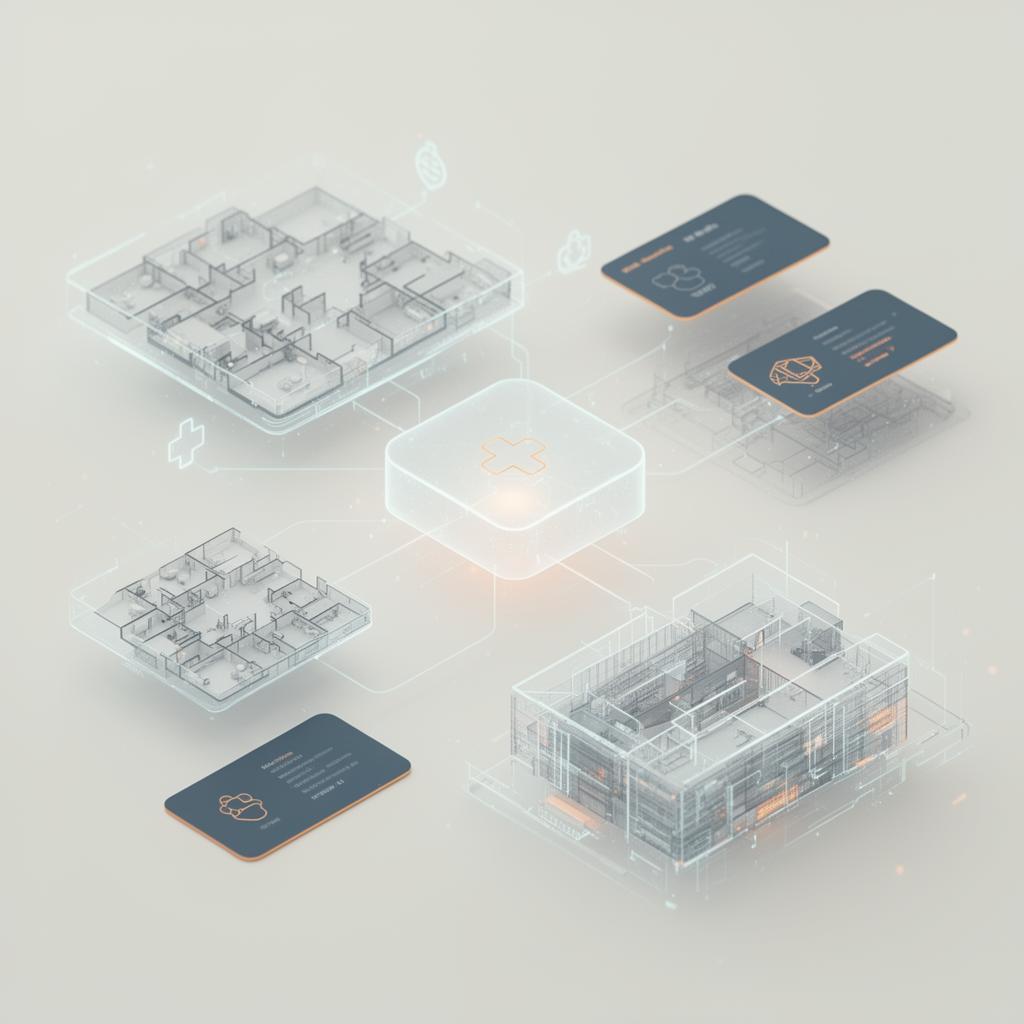
A durable AI system in AEC requires three layers: a clean, governed data foundation (your models, drawings, and project records); an integration layer that connects to your existing platforms (ACC, Procore, Aconex, SharePoint); and an application layer where the AI models actually run. Skip any layer and the system breaks under real conditions. The firms that invest in all three are the ones whose AI tools compound in value across every future project.
Custom AI vs. Off-the-Shelf Tools
Generic AI tools built for broad markets will never understand the nuances of your delivery process. A compliance chatbot trained on Australian NCC standards is fundamentally different from one trained on UK Building Regulations. A layout generator for data centres has completely different constraints from one designed for residential apartments. The competitive edge comes from AI systems built around your specific project types, standards, and team workflows.
Where GIRIH X Fits
We build production-grade AI systems for AEC firms: compliance agents, generative design tools, predictive dashboards, and document intelligence pipelines. Not demos, not research papers. Systems your team uses on Monday morning. Every AI tool we build integrates with your existing BIM environment, CDE, and project management platforms, so it slots into how your team already works.
Frequently asked questions
What AI applications actually deliver ROI in AEC right now?
Four categories deliver measurable ROI today: compliance and code-checking agents that parse standards documents and flag non-conformances across model elements, generative layout tools that produce optimised spatial arrangements for data centres, hospitals, and residential projects in minutes, predictive analytics that forecast programme delays and cost overruns from historical project data, and document classification systems that turn unstructured RFIs, submittals, and specifications into structured, searchable data.
Why do most AI proof-of-concepts in construction never reach production?
The AEC industry generates huge volumes of drawings, models, RFIs, schedules, and site reports, but most of it sits in silos, unstructured and unused. The gap between a proof-of-concept demo and a system that survives real project pressure is vast, and most firms get stuck at the demo stage rather than building purpose-built pipelines tuned to their exact workflows.
What does a production-grade AI system for AEC actually require?
A durable AI system needs three layers: a clean, governed data foundation covering your models, drawings, and project records, an integration layer connecting to existing platforms such as ACC, Procore, Aconex, and SharePoint, and an application layer where the AI models run. Skipping any one of these layers means the system breaks under real project conditions.
Should we buy an off-the-shelf AI tool or build a custom one?
Generic AI tools built for broad markets will not understand the nuances of your delivery process. A compliance chatbot trained on Australian NCC standards is fundamentally different from one trained on UK Building Regulations, and a layout generator for data centres has different constraints to one built for residential apartments. The competitive edge comes from systems built around your specific project types, standards, and team workflows.
What kind of AI systems does GIRIH X build for AEC firms?
GIRIH X builds production-grade AI systems including compliance agents, generative design tools, predictive dashboards, and document intelligence pipelines, rather than demos or research prototypes. Every tool integrates with a firm's existing BIM environment, common data environment, and project management platforms so it fits directly into how the team already works.
Related services
Related case studies

Need help implementing this in your projects?
We build production-grade systems, not theoretical frameworks. Let's discuss your specific challenges.