Clash Detection and Model Coordination: Best Practices
Clash detection identifies spatial conflicts between building systems, such as a duct crossing a structural beam, digitally before they become costly physical problems on site. Best practice relies on cloud-based coordination platforms that federate models across disciplines and generate automated clash reports on a regular cadence, backed by model verification against survey scans and compliance standards. Beyond clashes, coordinated models also support construction visualisation, sequencing, and site logistics modelling to reduce on-site revisions.
Why Clash Detection Matters
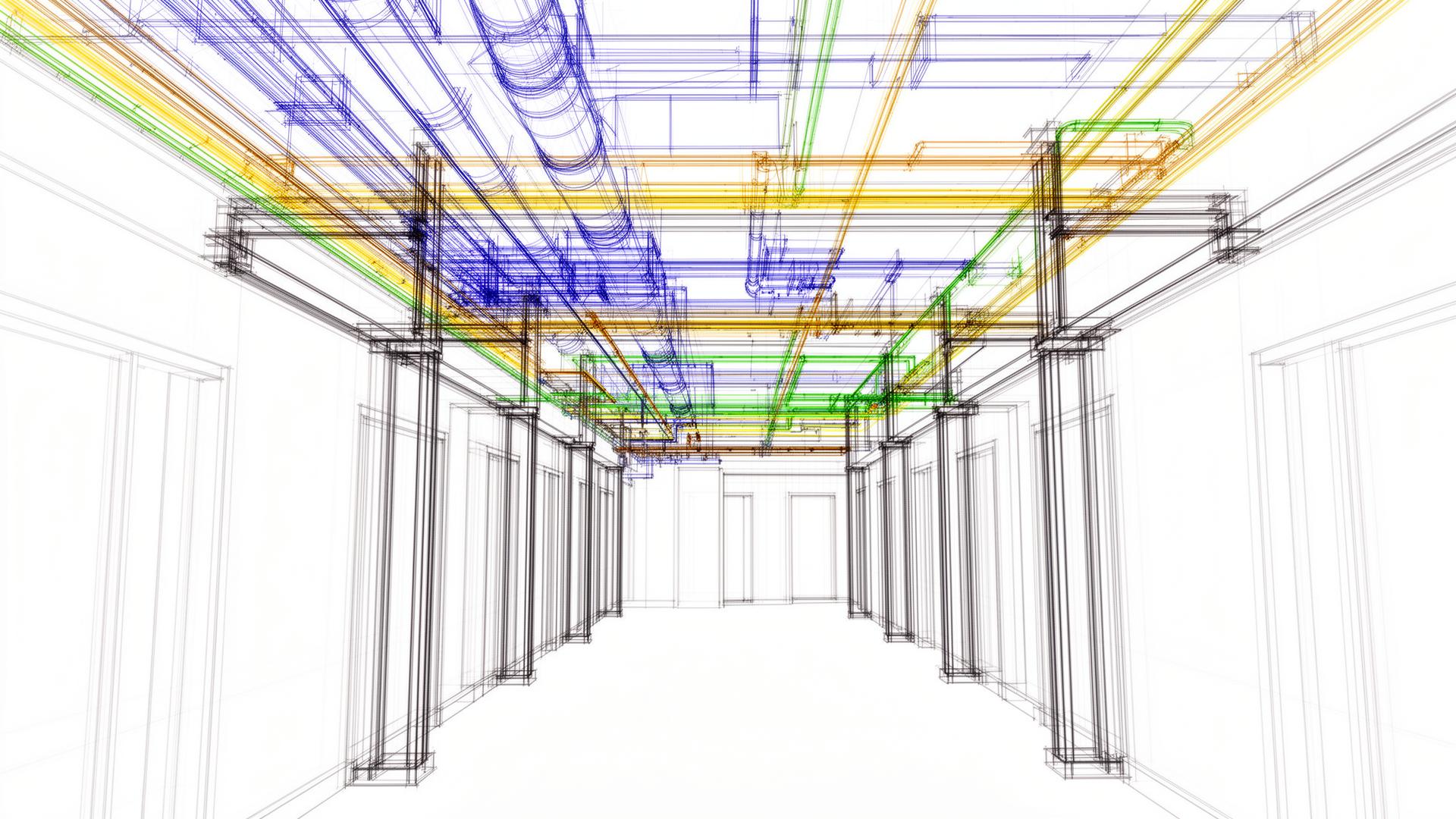
Spatial conflicts between building systems are among the most expensive problems in construction. A duct running through a structural beam or a pipe intersecting a wall cavity can cause costly rework, schedule delays, and safety hazards. Clash detection identifies these conflicts digitally before they become physical problems.
Cloud-Based Coordination
Modern coordination workflows leverage cloud platforms for model collaboration, document control, model federation, and automated clash detection. These platforms enable multiple disciplines to work on federated models simultaneously, with automated clash reports generated on a regular cadence.
Model Verification and Audit
Effective coordination requires verified models. This includes integrating survey scans in Revit to validate existing conditions, auditing models for compliance with project standards, and verifying that model elements contain the data required for downstream processes like quantity takeoff and fabrication.
Construction Visualisation and Sequencing
Beyond clash detection, coordinated models enable construction visualisation that creates dynamic, detailed representations for stakeholder communication. Construction sequencing models automate the generation of views based on the construction programme, showing exactly what gets built, when, and in what order.
Site Logistics Modelling
Site logistics modelling uses BIM to demonstrate and coordinate construction methodologies. This includes crane placement, material staging, temporary works, and access routes. By modelling logistics digitally, teams can identify conflicts and optimise construction methods before mobilising to site.
Frequently asked questions
What is clash detection in BIM?
Clash detection is the process of identifying spatial conflicts between building systems digitally before they become physical problems. Examples include a duct running through a structural beam or a pipe intersecting a wall cavity, both of which can cause costly rework, schedule delays, and safety hazards if not caught before construction.
How does cloud-based coordination improve clash detection?
Cloud platforms support model collaboration, document control, model federation, and automated clash detection, enabling multiple disciplines to work on federated models simultaneously. Automated clash reports are generated on a regular cadence, so conflicts surface continuously rather than only at scheduled coordination meetings.
Why is model verification important for coordination?
Effective coordination requires verified models. This includes integrating survey scans in Revit to validate existing conditions, auditing models for compliance with project standards, and verifying that model elements contain the data required for downstream processes like quantity takeoff and fabrication.
What is construction sequencing in a coordinated BIM model?
Construction sequencing models automate the generation of views based on the construction programme, showing exactly what gets built, when, and in what order. Combined with construction visualisation, this creates dynamic, detailed representations that support stakeholder communication throughout delivery.
What is site logistics modelling used for?
Site logistics modelling uses BIM to demonstrate and coordinate construction methodologies, including crane placement, material staging, temporary works, and access routes. Modelling logistics digitally allows teams to identify conflicts and optimise construction methods before mobilising to site.
Related case studies

Need help implementing this in your projects?
We build production-grade systems, not theoretical frameworks. Let's discuss your specific challenges.