Product Digitisation, From Design to Life
Why a Product Is Never Just a Product
Specifying a product is a decision with consequences. The look and feel matters, of course, but so does everything that sits behind it: the geometry, the materials, the dimensions, the BIM data, the technical specifications, the certifications, the usage expectations, the way it interacts with neighbouring products in the same supplier catalogue, and the way it lives in a real space once installed. When any of those layers is thin, the decision is thin. We build products as complete digital assets so that every stakeholder, designer, engineer, client, and end consumer, has the full picture they need to choose with confidence.
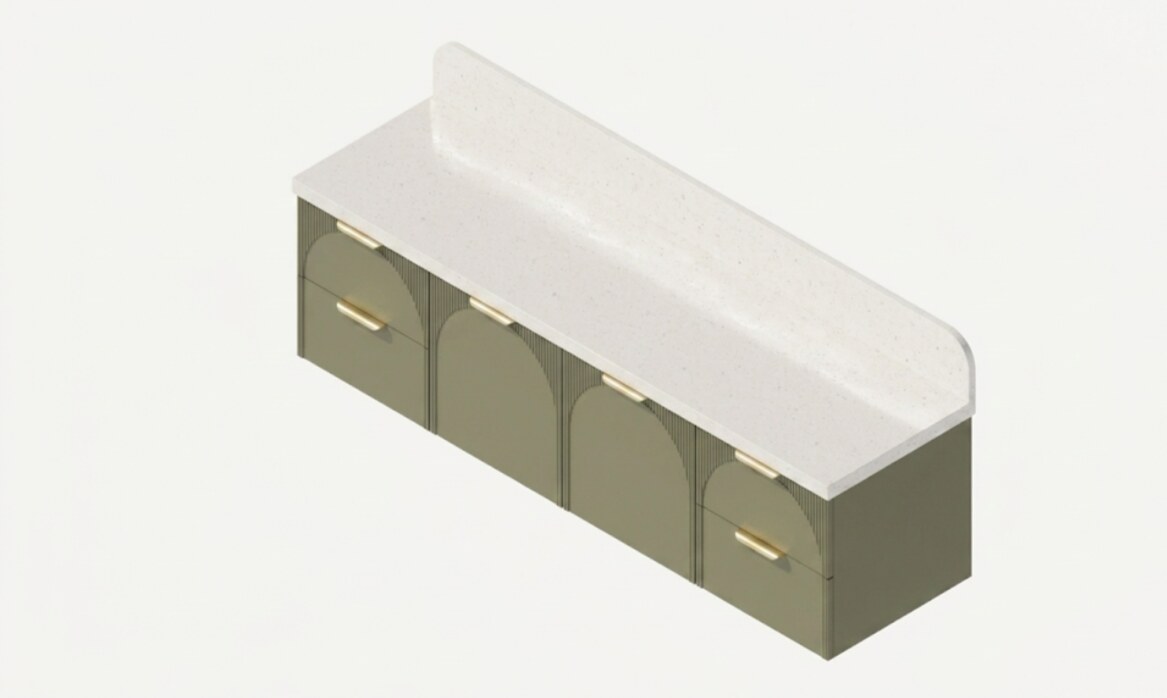
Get the Product Right
Industry standard, BIM standard, brand standard. Dimensions to the millimetre. Materials with realistic PBR maps. Parameters that match the manufacturer's data dictionary. Certifications, warranties, and technical specifications that designers actually need at the spec stage. This is the foundation, and it cannot be skipped. Without a high-quality master, every downstream output, every render, every catalogue, every configurator, inherits the same compromises.
Show How Products Live Together
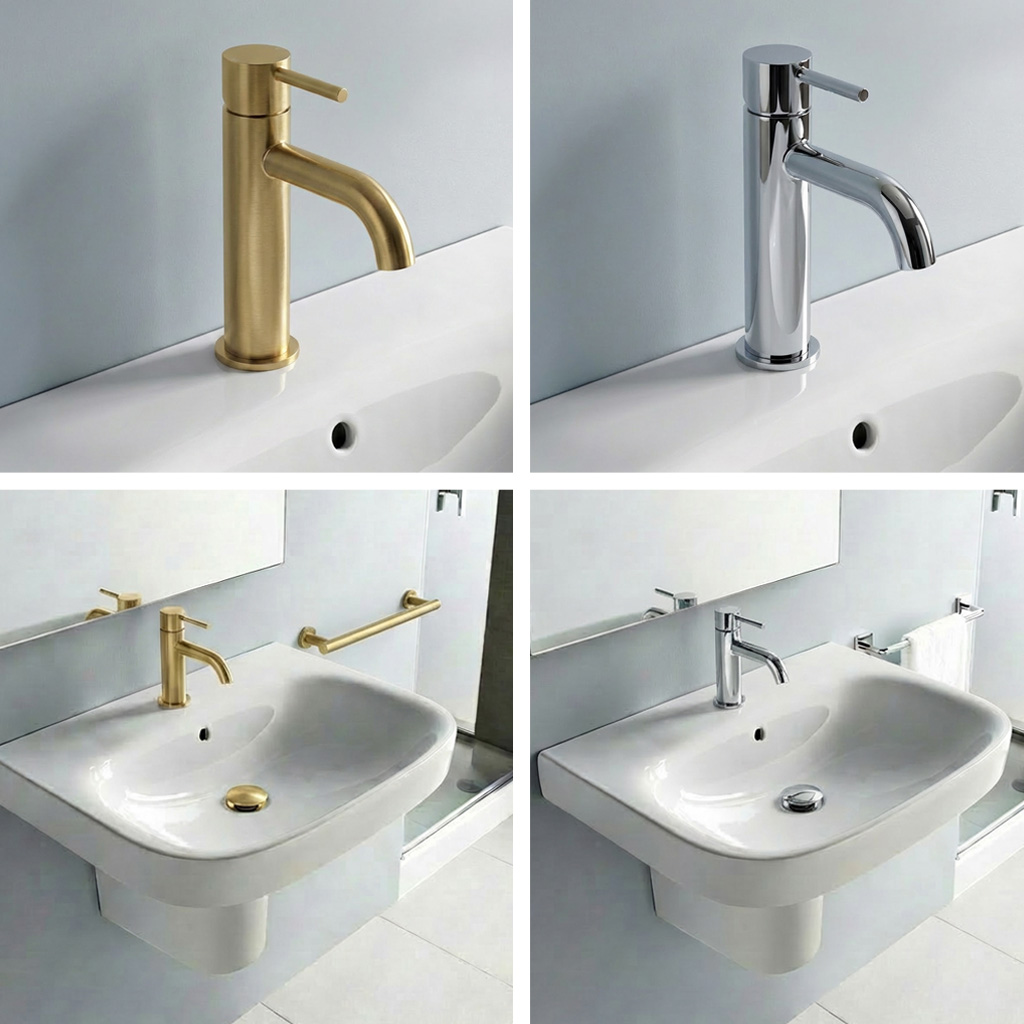
Designers do not specify in isolation. They specify ranges, families, and matched suites. Tapware that pairs with the basin. Mirror cabinets that align with the vanity. Finishes that carry across a coordinated suite. We build product ecosystems, not orphans, so that the supplier's full catalogue logic comes through and the designer can see how a single choice opens up a coordinated range.
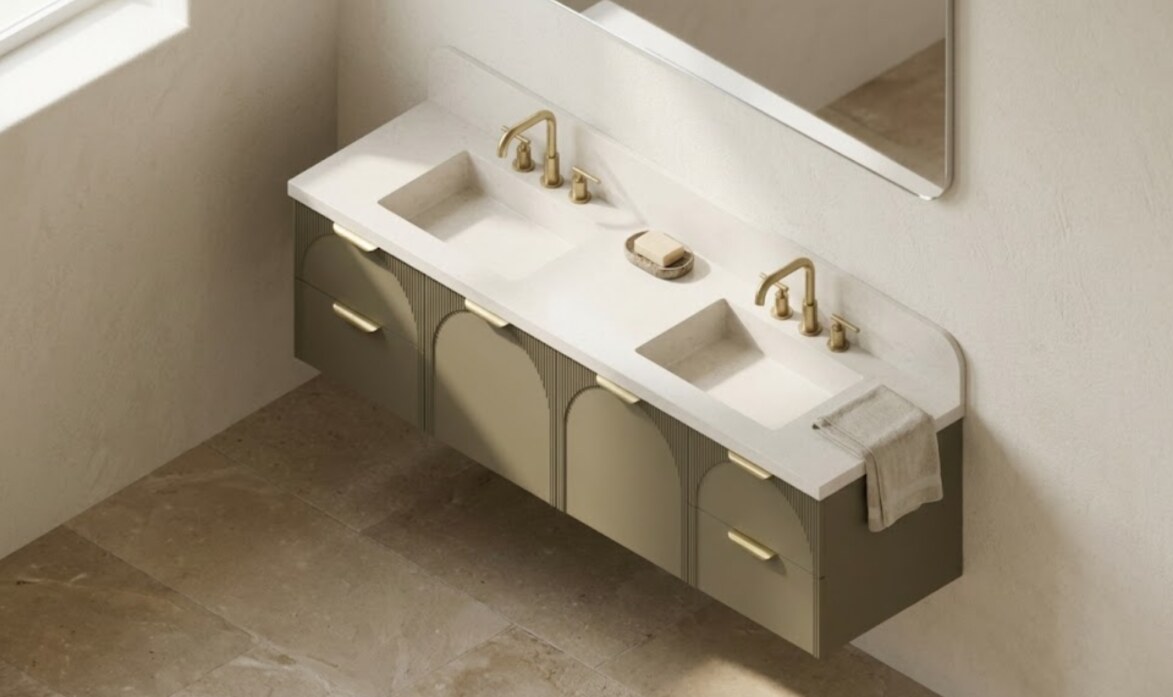
Put It in a Real Space
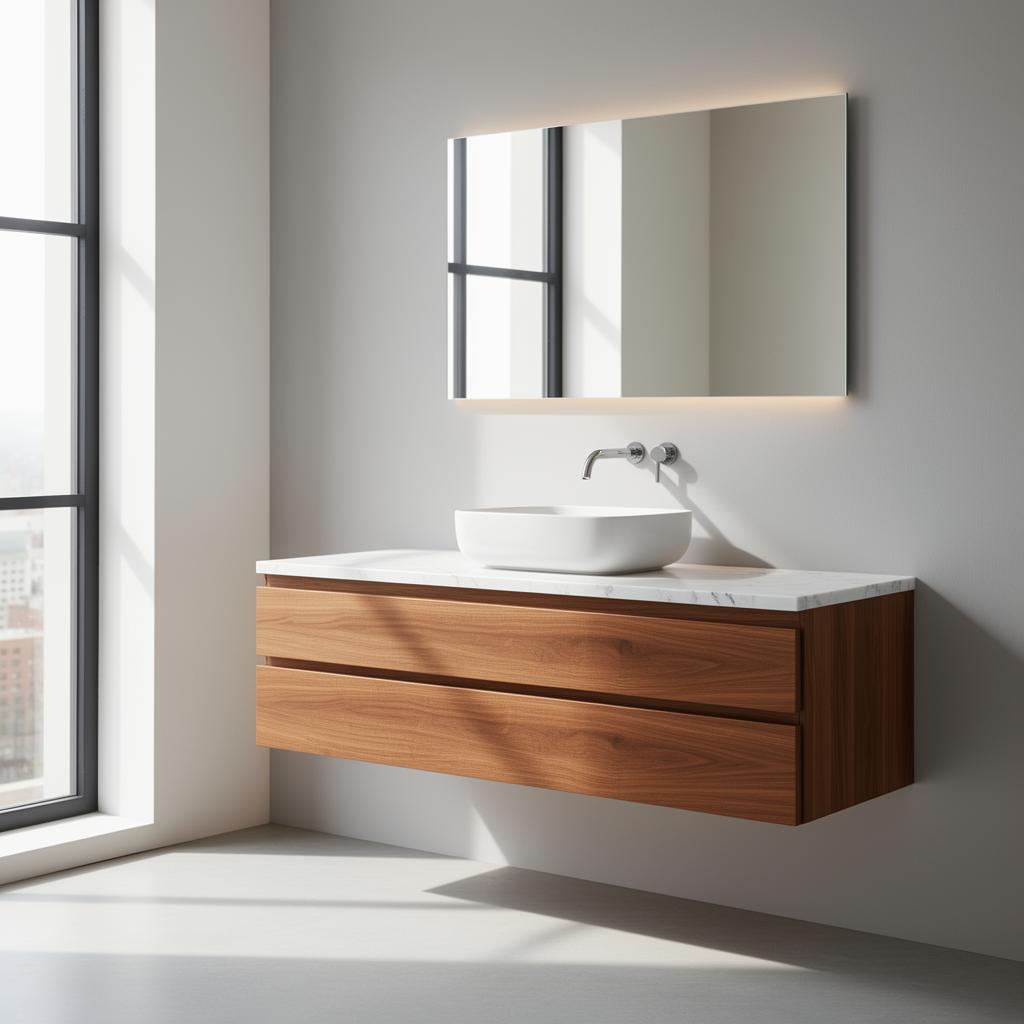
A product on a white background tells half the story. The same product in a styled, lit, real-world scene tells the rest. Depth, scale, surrounding finishes, the way light falls on the basin. This is what end consumers respond to and what helps everyone, from the architect through to the homeowner, picture the product in their own space. Realistic context is no longer a nice-to-have; it is the difference between considered and chosen.
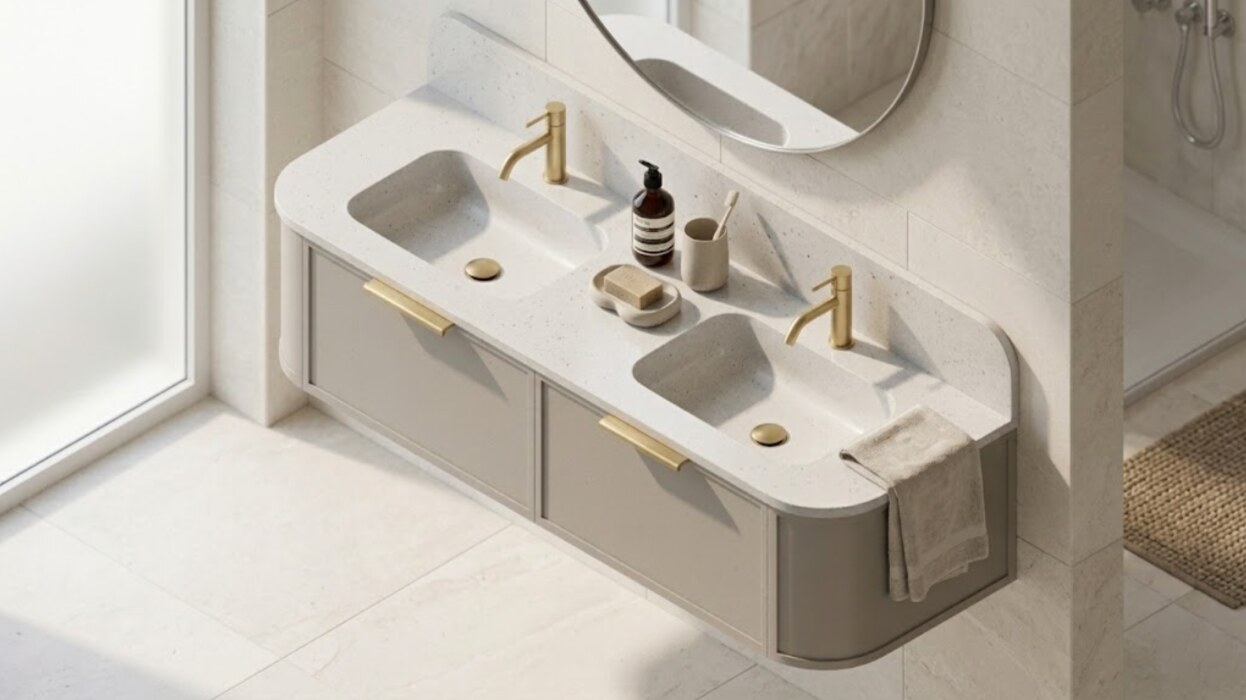
From Decision Maker to End Consumer
Architects, interior designers, and engineers need fact-based assets to specify with confidence. Clients need clarity to approve. End consumers, the people who will live with the product every day, deserve the same quality of information when they walk into a showroom or open a website. When the digital asset is built right, it serves all of them from the same source, with no dilution at any step.
End-to-End, From a Single Maintainable Asset
We deliver the full pipeline: master geometry and materials, BIM and parametric data, AI-powered Signature product imagery, configurators powered by industry-leading 3D engines, multi-format CAD and BIM exports, and global exposure on the platforms designers already use. One source of truth, many outputs, every channel covered. Build once, scale everywhere.
What This Looks Like in Practice
We have built this end-to-end pipeline for some of the most respected names in bathroom, tapware, and built-product manufacturing: comprehensive BIM libraries, configurable product platforms, full Signature imagery catalogues, and BIMobject-hosted families that reach millions of designers. The pattern applies far beyond vanities: any retailer, manufacturer, or supplier wanting to lead in their market can use the same model.
Related services
Built for
Related case studies

Need help implementing this in your projects?
We build production-grade systems, not theoretical frameworks. Let's discuss your specific challenges.