From Digital Model to Robotic Fabrication: Closing the Loop
Closing the loop between digital models and robotic fabrication means replacing manual drawing interpretation with a direct data pipeline that extracts geometry, material, and assembly data from BIM elements and converts it into machine-specific formats such as G-code, RAPID, or KRL. This pipeline includes automated nesting, collision detection, and quality checks, plus post-fabrication scanning that verifies produced components against the digital model. Over time, fabrication outcome data feeds back into design-for-assembly rules, turning the fabrication shop into a source of design intelligence rather than just an executor of instructions.
The Digital-to-Physical Gap
The AEC industry has spent decades digitising the design process. Models are parametric, coordinated, and increasingly intelligent. Yet the transition from digital model to physical component still typically involves a manual translation step: someone reads a drawing, interprets dimensions, and sets up a fabrication process by hand. This translation step introduces errors, consumes time, and severs the data continuity that makes BIM valuable. Closing this gap, creating a direct pipeline from model data to machine instruction, is the next frontier in construction productivity.
CNC and Robotic Fabrication Technologies
Computer Numerical Control (CNC) machines and multi-axis robotic arms are now common in advanced facade, steel, and timber fabrication shops. CNC routers cut panels from flat stock with sub-millimetre precision. Robotic welding cells join structural steel connections to consistent quality standards. 5-axis milling machines produce complex moulds for concrete or GRC elements. Robotic pick-and-place systems assemble prefabricated modules. The hardware is mature. The bottleneck is not the machines. It is the data pipeline that feeds them.
Building the Data Pipeline
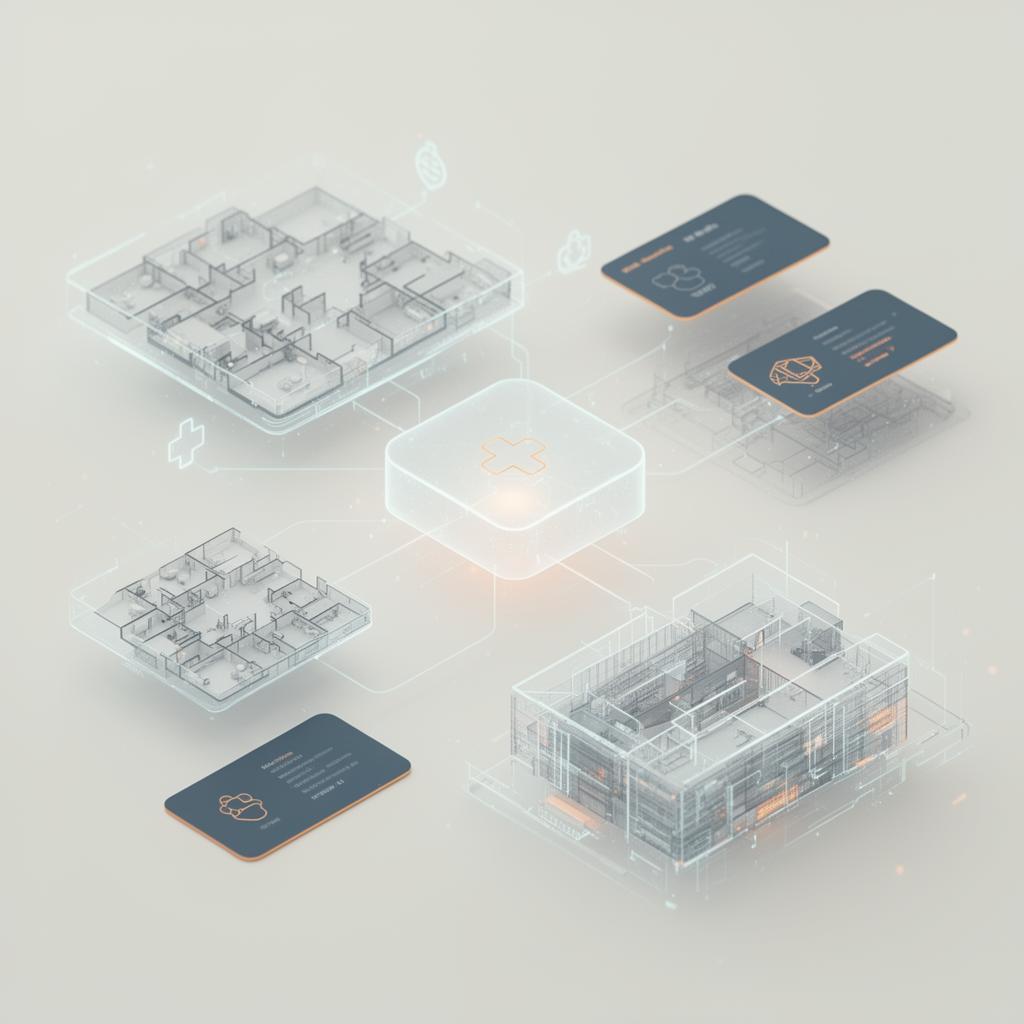
A production-grade fabrication data pipeline starts with BIM model elements that carry fabrication-relevant data: exact geometry, material specifications, connection details, and assembly sequencing. Our computational workflows extract this data, transform it into machine-specific formats (G-code for CNC, RAPID for ABB robots, KRL for KUKA), and deliver it directly to the fabrication equipment. The pipeline includes automated nesting algorithms that optimise material usage, collision detection that validates tool paths, and quality assurance checks that verify every output before it reaches the shop floor.
Quality Assurance in Automated Fabrication
Automation without quality assurance produces errors at machine speed. Our fabrication pipelines embed verification at every stage. Geometry is validated against design tolerances before CNC code is generated. Material quantities are cross-checked against procurement data. Assembly sequences are simulated to verify fit-up before physical production begins. Post-fabrication, 3D scanning and photogrammetry compare produced components against the digital model, creating a closed feedback loop that catches drift before it compounds across an assembly.
Scaling Fabrication Intelligence
The long-term value of automated fabrication is not just speed on a single project. It is building a fabrication intelligence capability that compounds across the business. Machine learning models trained on fabrication outcomes, cutting speeds, tool wear, surface quality, predict optimal machining parameters for new geometries. Assembly data from completed projects informs design-for-assembly rules for future work. The fabrication shop evolves from executing instructions to actively contributing design intelligence, closing the loop between making and designing.
Frequently asked questions
Why is there still a manual step between BIM models and physical fabrication?
Despite decades of digitising design, the transition from a digital model to a physical component typically still involves someone reading a drawing, interpreting dimensions, and setting up a fabrication process by hand. This manual translation step introduces errors, consumes time, and severs the data continuity that makes BIM valuable, which is why building a direct pipeline from model data to machine instruction is considered the next frontier in construction productivity.
What fabrication technologies are used in automated construction workflows?
CNC machines and multi-axis robotic arms are now common in advanced facade, steel, and timber fabrication shops. CNC routers cut panels from flat stock with sub-millimetre precision, robotic welding cells join structural steel connections to consistent quality standards, 5-axis milling machines produce complex moulds for concrete or GRC elements, and robotic pick-and-place systems assemble prefabricated modules. The hardware is mature; the real bottleneck is the data pipeline that feeds these machines.
How does data flow from a BIM model to a CNC machine or robotic arm?
A fabrication data pipeline starts with BIM model elements carrying fabrication-relevant data such as exact geometry, material specifications, connection details, and assembly sequencing. Computational workflows extract this data and transform it into machine-specific formats, such as G-code for CNC machines, RAPID for ABB robots, or KRL for KUKA robots, delivering it directly to the fabrication equipment along with automated nesting, collision detection, and quality checks.
How is quality assured in automated robotic fabrication?
Quality assurance is embedded at every stage: geometry is validated against design tolerances before CNC code is generated, material quantities are cross-checked against procurement data, and assembly sequences are simulated to verify fit-up before physical production begins. After fabrication, 3D scanning and photogrammetry compare produced components against the digital model, creating a closed feedback loop that catches drift before it compounds across an assembly.
What is the long-term value of investing in fabrication automation beyond a single project?
The long-term value is building a fabrication intelligence capability that compounds across a business. Machine learning models trained on fabrication outcomes such as cutting speeds, tool wear, and surface quality can predict optimal machining parameters for new geometries, while assembly data from completed projects informs design-for-assembly rules for future work, allowing the fabrication shop to contribute design intelligence rather than just executing instructions.
Related case studies

Need help implementing this in your projects?
We build production-grade systems, not theoretical frameworks. Let's discuss your specific challenges.